Introduction
How growing sales teams can move beyond a shared WhatsApp number to a proper unified inbox — and why it changes response times, lead ownership, and team coordination.
Why Your Sales Team Needs More Than Just a WhatsApp Number
Every growing business reaches the same wall
You start on WhatsApp because your customers are there. One number, one phone, one rep handling it all. It works — until it doesn't. Suddenly three agents are sharing the same login, messages are going unanswered, and nobody knows whose lead is whose. A prospect who messaged on Tuesday gets a follow-up on Friday. By then, they've already signed with someone else.
I've seen this pattern across logistics companies, travel agencies, and e-commerce teams. WhatsApp is where customers want to talk, but it was never built for teams.
What actually fixes this
The obvious answer is a WhatsApp CRM integration — route inbound messages to a shared inbox, assign conversations to agents, track resolution status. Simple in theory, messy in practice because most CRMs bolt WhatsApp on as an afterthought. You end up toggling between five tabs.
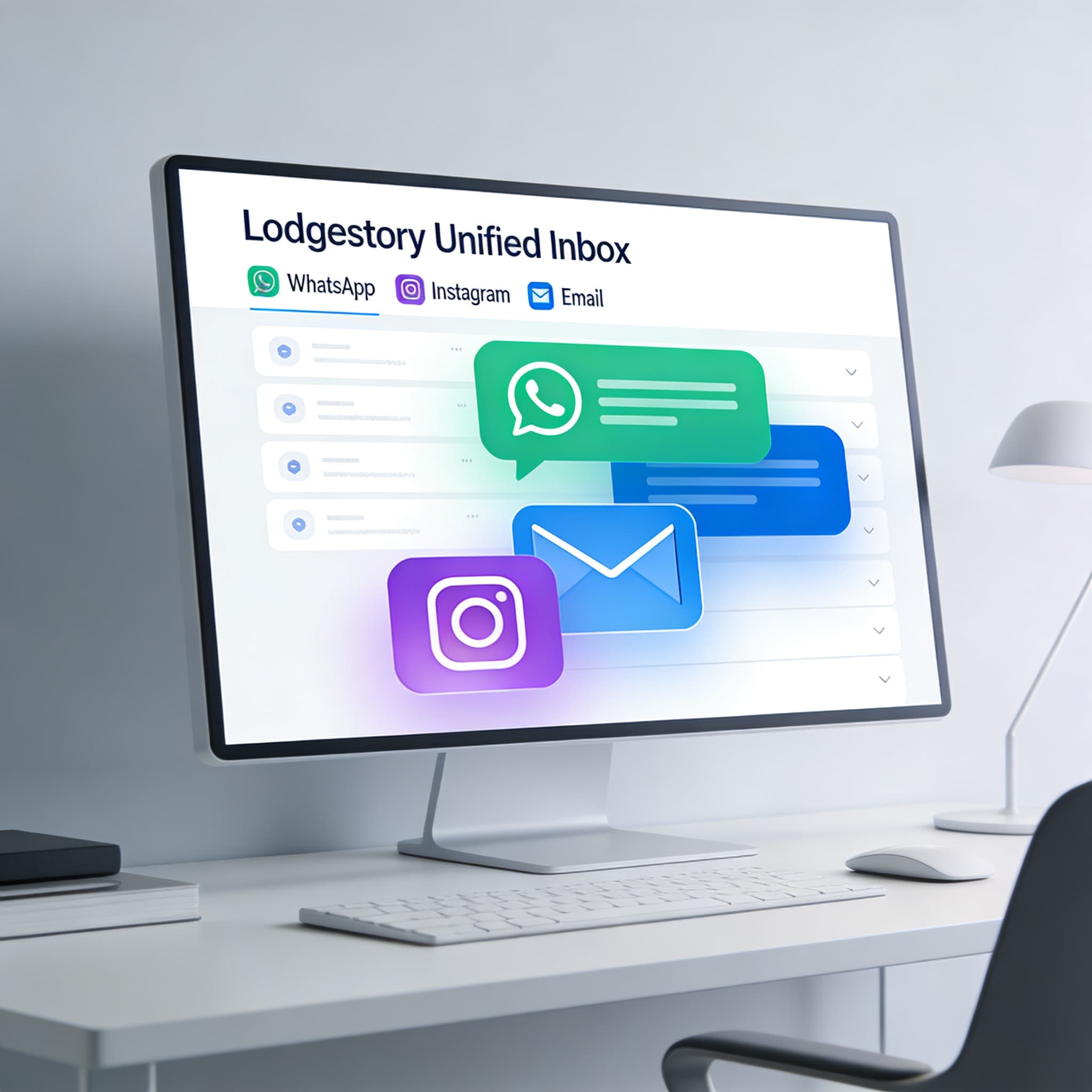
What caught my attention with Lodgestory is that it builds the other direction. The unified inbox is the product, and WhatsApp is just one of the channels feeding into it — alongside Instagram DMs, Messenger, email, and web chat. Every conversation lands in one place, assigned to one agent, with a full contact history visible regardless of which channel the customer used last.
That's a different approach. Most tools force you to manage WhatsApp separately. This one treats it as part of a broader omnichannel customer engagement layer, which matters more than it sounds once your team is handling volume.
The part worth noting for sales teams specifically
Lodgestory includes a no-code bot journey builder that handles first-touch qualification before an agent gets involved. A customer messages asking about pricing — the bot captures their requirements, qualifies the lead, and routes the conversation to the right rep with context already attached.
For high-volume inbound teams (the platform reports up to 70% of queries being auto-resolved before human handoff), this changes the shape of the support queue considerably. Agents spend time on conversations that need them, not on 'what are your business hours.'
It also integrates with HubSpot and Salesforce, so if you're already running a CRM for pipeline management, WhatsApp conversations can sync rather than exist in a parallel universe.
Where it fits best
Worth checking out if you're a team of 5–50 people where WhatsApp is a primary customer channel and you're hitting the coordination ceiling — message ownership gets murky, response times slip, and leads fall through. The free tier is generous enough to evaluate it properly without a sales call.
Less relevant if you're at a stage where a full omnichannel stack feels like overkill and a single rep on one device still covers your volume comfortably.
──────────────────────────────────────────────────
The broader trend here is that customers have voted with their thumbs — messaging apps won. The question for businesses is whether their internal tooling has caught up. A unified inbox for business messaging isn't a nice-to-have at this point; it's table stakes for any team taking inbound seriously.
Worth a look: https://lodgestory.com/signup