Key Takeaways
- Misclassified feedback distorts customer understanding, leading to wrong product decisions and missed opportunities.
- A structured framework based on collection method, timing, purpose, and source transforms fragmented input into actionable insights.
- With Lodgestory’s omnichannel inbox, AI agents, and feedback automation, businesses can unify all feedback — direct, indirect, and behavioral — in one workspace and analyze it 70% faster.
Introduction
Customer feedback is no longer a side activity for support teams — it’s a strategic lens through which data-driven organizations sense customer expectations in real time. Yet as the number of feedback channels multiplies — from WhatsApp chats and Instagram DMs to email, call transcripts, and post‑purchase surveys — most companies struggle to interpret what their customers truly mean.
Misclassification is the silent killer of customer intelligence. When feedback is incorrectly tagged or categorized — for example, when a usability complaint is bucketed under general dissatisfaction — decisions based on that feedback become skewed. Research shows that 61% of large enterprises now use AI to analyze feedback, cutting processing times by up to 70% and shortening their “insight‑to‑action” window from 18.3 days to just over four. Companies using structured classification frameworks report notably higher accuracy and alignment between customer intent and internal action.
This is where Lodgestory bridges the gap. With its unified customer inbox, omni‑channel feedback capture, and AI agents trained on organization-specific knowledge, Lodgestory automatically organizes feedback across all sources — bringing clarity and speed to an otherwise chaotic process.
What Is Customer Feedback, Really?
Customer feedback isn’t just survey results. It includes everything customers explicitly say, imply, or reveal through their behavior. Feedback can originate from:
- A WhatsApp message about a delay in logistics.
- A voice call to a hotel’s reservation desk.
- A one‑star review on Google or TripAdvisor.
- Interaction logs from your web widget or app.
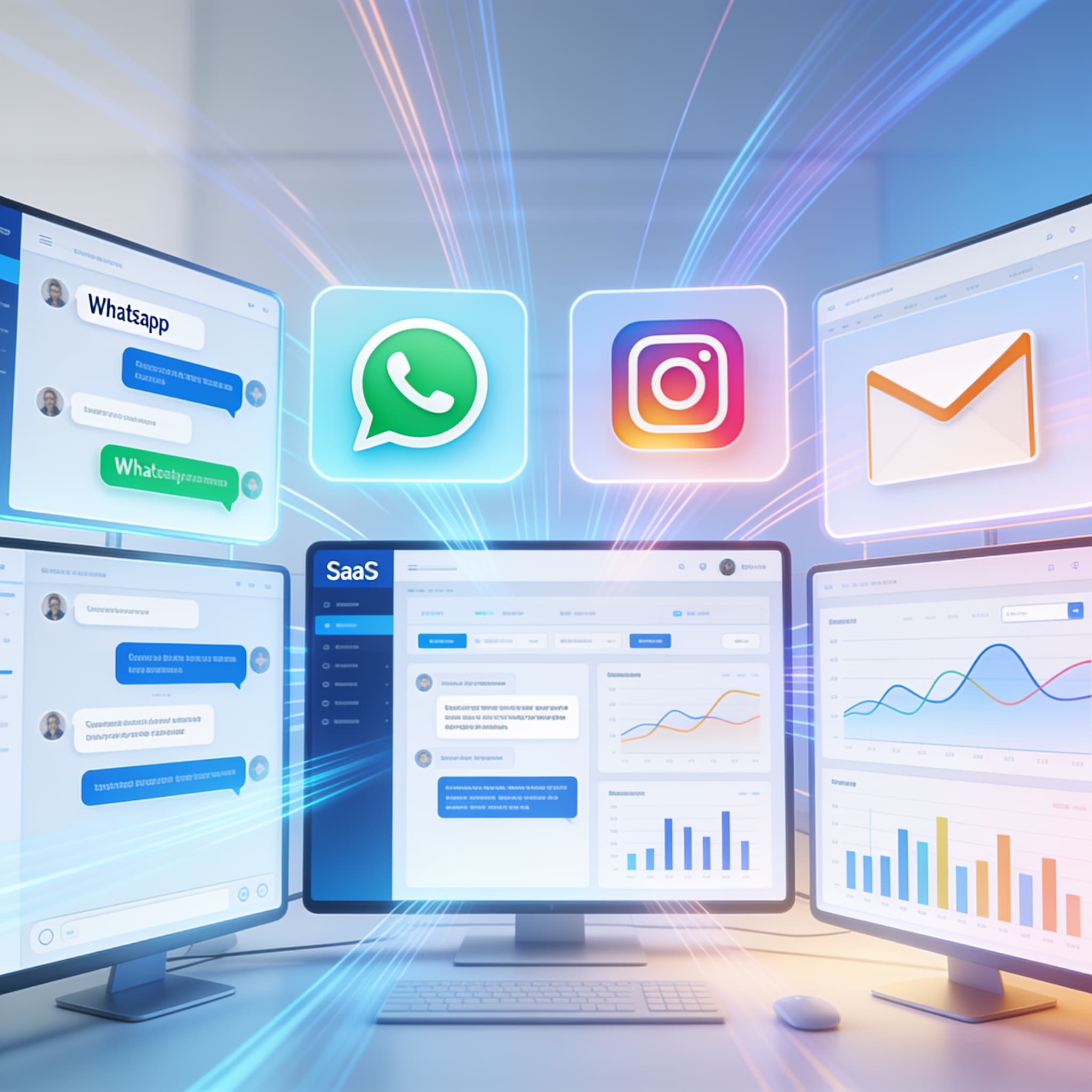
Within Lodgestory, these fragmented inputs are centralized in a unified inbox that spans WhatsApp, Instagram DM, Email, SMS, and Voice/IVR. AI agents label, summarize, and classify each conversation in real time, turning raw dialogue into structured intelligence ready for analysis.
When feedback is unified and categorized, it becomes a growth engine rather than a backlog.
The Framework: 10 Types of Customer Feedback
Lodgestory encourages organizations to view customer feedback through four critical lenses — collection method, timing, purpose, and source. Together, these reveal ten major types of feedback every business should understand and act upon.
A. By Collection Method
1. Direct Feedback – What Customers Explicitly Tell You
Direct feedback is intentional. It comes from surveys, live chats, voice calls, or ticket forms. For example:
- CSAT (Customer Satisfaction) surveys sent immediately after a support interaction through WhatsApp or email.
- NPS (Net Promoter Score) campaigns automated via Lodgestory broadcasts.
Lodgestory’s no‑code Bot Journey Builder helps design and automate these surveys directly within customer conversations. Results are logged under CRM records, allowing teams to correlate satisfaction with specific agents, products, or regions.
2. Indirect Feedback – What Customers Reveal Unprompted
Indirect feedback includes online reviews, social media posts, and comment threads that you didn’t request but still contain valuable insights. For instance:
- Reviews left on Google or Instagram stories mentioning brand performance.
- Message sentiment trends analyzed from DMs or broadcast replies.
Inside Lodgestory, AI agents powered by OpenRouter analyze text tone and keywords to classify indirect sentiment into themes — advocacy, frustration, curiosity — which flow into analytics dashboards for longitudinal tracking.
3. Inferred Feedback – What Behavior Tells You
Inferred feedback comes from behavioral data: chat durations, voice call abandon rates, bounce times, or the frequency of repeat questions. For example, if a guest frequently reopens the same booking inquiry, that signals confusion in booking flow.
Lodgestory’s CRM merges these patterns with structured metrics like First Response Time (FRT) and Average Handling Time (AHT), enabling seamless connection between behavioral data and operational KPIs (read more about reducing ART with Lodgestory).
B. By Timing
4. Real‑Time Feedback
Captured during the actual interaction — such as a guest informing a hotel receptionist via chat about room temperature — real‑time feedback demands immediate response.
Lodgestory’s AI Agents can interpret the message and auto‑assign tickets based on urgency levels (SOS, High, Medium, Low), enabling human agents to intervene with contextual awareness. This shortens response loops and creates faster service resolution (see how Lodgestory automates real‑time surveys).
5. Retrospective Feedback
Gathered after service completion, this feedback includes satisfaction surveys, follow‑up emails, or post‑checkout NPS campaigns. Lodgestory’s message scheduler automates such follow‑ups, ensuring each customer engagement is closed with a data‑rich pulse check.
C. By Purpose
6. Performance‑Focused Feedback
This type measures service quality — for instance, satisfaction with customer care responsiveness or voice agent clarity. Lodgestory consolidates these with its call analytics and ticketing reports, helping brands detect bottlenecks across teams or time zones.
7. Product‑Improvement Feedback
Customers frequently share insights about what features, menu options, or delivery modes they’d love to see. These suggestions often emerge from support tickets or chatbots. Lodgestory’s Bot Journeys capture these automatically, tagging them into CRM properties labeled as feature requests or experience blockers.
8. Campaign‑Driven Feedback
Feedback collected post-marketing or broadcast campaigns measures message clarity, call-to-action engagement, and advocacy. Lodgestory’s WhatsApp broadcast analytics highlight delivery rates and response sentiment, feeding data back into campaign design for A/B optimization.
D. By Source
9. Customer‑Initiated Feedback
This is feedback the customer voluntarily provides, such as emailing a suggestion or leaving a voice note. Lodgestory captures and links it to individual CRM profiles — ensuring personalized follow‑up by the right department.
10. Agent‑Observed Feedback
Often underestimated, this type comes from internal notes or staff observations about recurring customer behavior. Lodgestory’s Agent Panel allows front‑line staff to record such insights directly in the conversation context, ensuring that future teams benefit from pattern recognition learned at the ground level.
Why Misclassification Is Costly — and How Lodgestory Solves It
Without consistent taxonomy and AI‑assisted tagging, organizations risk fragmented data:
- A sarcastic review misread as praise.
- Feature suggestions buried under generic complaints.
- Critical incidents misrouted to the wrong department.
Lodgestory prevents these pitfalls by combining AI semantic search and structured feedback taxonomies. Using OpenAI-powered embeddings, the platform identifies topic clusters and sentiment nuances in WhatsApp conversations, emails, and calls to ensure accurate labeling.
The result: an intelligent Voice of the Customer (VoC) view, seamlessly unified across channels, agents, and time windows. Lodgestory’s customers in hospitality, healthcare, and logistics report not only 40% faster response times, but also more confident prioritization in their service improvements — turning feedback loops into launchpads for innovation.
Conclusion
Treat customer feedback not as noise, but as your strategic operating system. With every touchpoint captured, categorized, and analyzed through Lodgestory’s omnichannel AI platform, businesses transform fragmented conversations into actionable insights that drive growth.
The fastest‑learning organizations are those that listen — at scale.
Sign up with Free Forever Plan to start building your unified Voice of the Customer engine today.