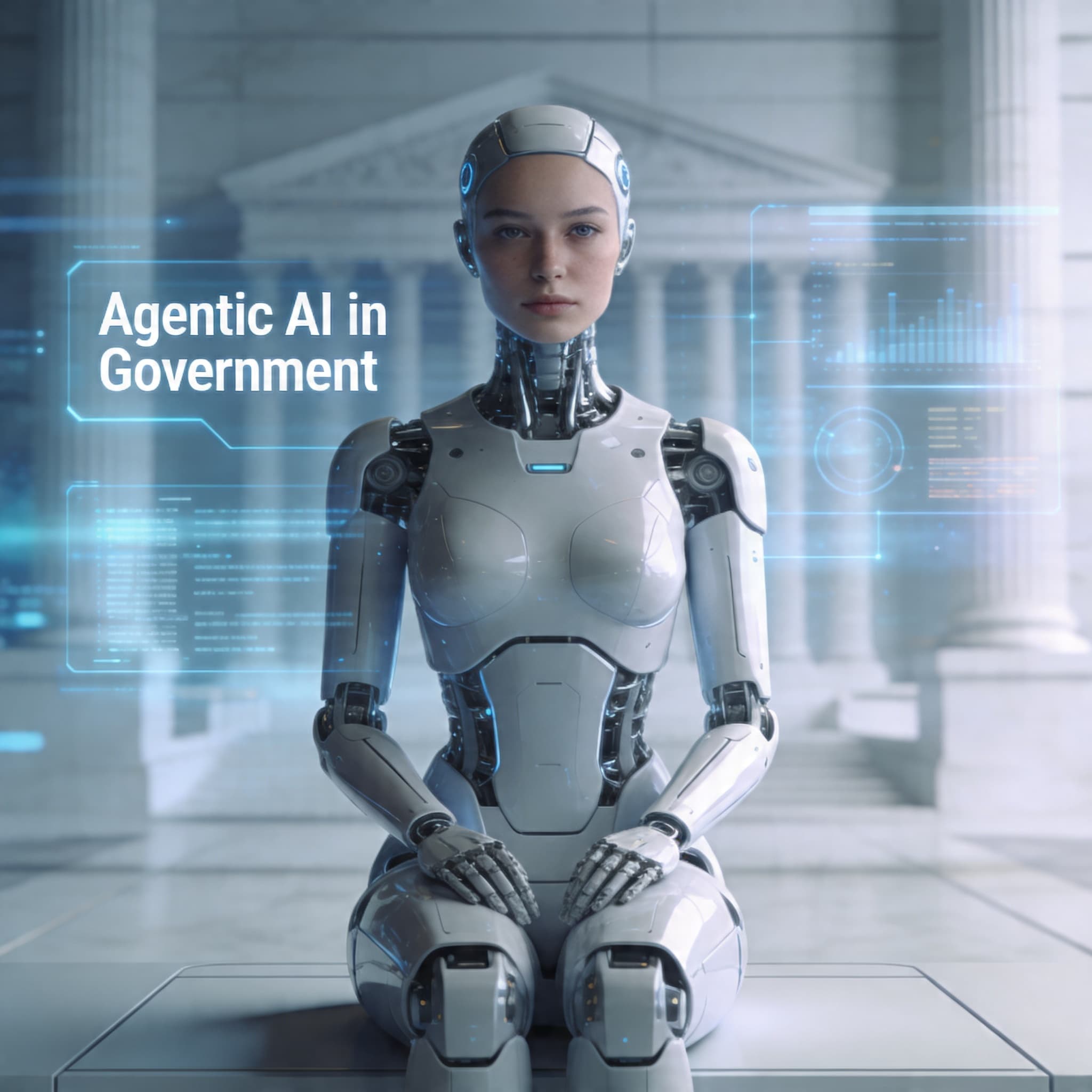
3 Critical Foundations for Deploying Agentic AI in Government Services
Agentic AI — systems capable of autonomously planning, prioritizing, and executing complex workflows — is redefining how government agencies operate. Yet, real transformation requires more than automation software. To make agentic systems trustworthy, responsive, and efficient, public institutions need the right technological, organizational, and ethical foundations.
At Lodgestory, we’ve seen how autonomous agents can radically modernize service delivery. Our AI Agent framework — powered by OpenRouter-based reasoning and flexible tool calling — allows organizations to automate up to 70% of citizen interactions across WhatsApp, Email, Voice/IVR, and more, while maintaining accountability and transparency. Below, we outline the three most pressing needs for deploying agentic AI in the public sector and how Lodgestory’s ecosystem addresses them.
1. Robust Data Integration and Interoperability
Every successful AI implementation begins with good data — organized, secure, and accessible across silos. The public sector’s biggest challenge isn’t the lack of AI capability but fragmented data ecosystems built over decades of isolated systems.
The Data Problem in Context
As of 2025, over 55% of government organizations globally use some form of AI, and federal agencies alone reported 3,611 AI use cases, up 105% from 2024. Yet, about 70%–85% of AI projects fail to meet expectations due to poor data readiness and governance. Many agents are unable to operate across departmental boundaries because data remains locked in unstructured formats or held in legacy systems.
Lodgestory’s Data-Ready Architecture
Lodgestory’s omnichannel platform is purpose-built to function as an intelligent communication and data layer across teams, departments, and channels. Through External Item Webhooks and API integrations, it connects to existing databases (e.g., document management, citizen record systems, and service request software) without requiring central data migration. This mirrors how modern public data exchanges like Estonia’s Bürokratt connect agencies via APIs instead of central repositories.
Lodgestory’s no-code Bot Journey Builder makes it easy for administrators to design agent workflows that retrieve, store, and act on distributed data securely. Each agent interaction can be enriched with real-time system variables, validated data checks, and contextual branching—all without direct data exposure. Example: A city license renewal journey can cross-reference citizen data from multiple systems, validate documentation via API, and escalate incomplete cases to a live agent via the shared inbox.
The result: departments can collaborate securely without creating new data silos — enabling AI agents to operate on clean, auditable information sources.
2. Governance, Transparency, and Human Oversight
Agentic AI offers the potential for government services that run continuously — but it also introduces a critical need for human governance. Accountability mechanisms determine how autonomous decisions are verified, logged, and audited.
The Accountability Challenge
One of the largest concerns in AI adoption across governments is operational risk. Public agencies must maintain transparency and avoid delegating high-risk decisions (like eligibility or compliance rulings) entirely to machines. Without governance protocols, an AI-driven error in citizen service can quickly become a reputational and legal crisis.
Lodgestory’s Built-In Accountability Framework
Lodgestory embeds responsible automation across every element of the workflow:
- Agent Handoff and SLA Management: AI agents automatically transfer conversations requiring human judgement to an assigned officer or supervisor while tracking SLA timers.
- Traceable Conversation Histories: Every interaction — whether bot, AI agent, or human — is time-stamped, archived, and searchable for compliance audits.
- Knowledge-Scoped Agents: AI agents operate using organization-specific knowledge bases built with OpenAI’s text-embedding-3-small vectors, ensuring they act within documented, approved information boundaries.
These measures align with emerging public AI governance standards that prioritize transparency, human-in-the-loop review, and traceability. Agencies can strike a healthy balance between autonomy and oversight — where routine inquiries (e.g., scheduling, document intake, complaint logging) are handled automatically, while complex or policy-impacting cases are handled manually.
Want to explore how this works in commercial environments? See our deep dive on The Era of Agentic AI: How Multi-Agent Orchestration is Redefining Customer Journeys.
3. Preparing the Workforce for Human–AI Collaboration
Technology succeeds only when humans evolve alongside it. Governments that view AI as augmentation rather than replacement experience higher adoption rates and better service outcomes. The 2025 American Customer Satisfaction Index recorded a 19-year high in citizen satisfaction (70.4/100), driven primarily by proactive AI communication tools — proving how human–AI collaboration can directly improve public trust.
Change Enablement in Practice
Public employees often face “initiative fatigue” when new systems arrive without clear training. Lodgestory addresses this through intuitive interface design and role-based access:
- Unified Inbox for All Channels: Simplifies chat, call, and email handling from one dashboard.
- No-Code Bot Journeys: Allows non-developers to build automations with drag-and-drop nodes — reducing IT burden.
- Canned Responses & Templates: Let agents respond uniformly to citizen requests with approved messaging, minimizing errors.
Agencies using Lodgestory report response rates improving by 40% and ticket resolution times shrinking by 50%, thanks to seamless agent collaboration and automation. For example, a regional transport authority using Lodgestory was able to automate 65% of permit renewal queries via WhatsApp and IVR while rerouting complex cases to a live adjudicator queue.
The takeaway: preparing your workforce isn’t about replacing expertise; it’s about freeing professionals from repetitive tasks so they can focus on impactful decision-making.
Balancing Efficiency with Public Trust
Agentic AI can make government services faster, more adaptive, and more inclusive — but citizens must trust the system. That trust is earned through measurable transparency, reliable data integration, and responsible human oversight.
Lodgestory’s public-sector-ready AI stack — combining omnichannel automation, auditable conversation records, SLA tracking, and AI governance controls — equips agencies to deliver modern, responsive public experiences without compromising accountability.
To modernize your department’s citizen service operations with responsible automation, sign up with our Free Forever Plan and explore how Lodgestory’s AI-driven workflows can transform your public engagement strategies.
Related Reads: