A/B Testing Reimagined: Turning Automated Email Resends into Experiments with Lodgestory
In digital marketing, the difference between a campaign that converts and one that fails often hinges on micro-optimizations — the choice of a subject line, send time, or even the tone of a single CTA. Yet, 60% of subscribers on average do not open the first email they receive. Traditional follow-ups treat these non-openers as a loss to be recovered. Lodgestory redefines this moment of missed engagement as an opportunity for experimentation.
By combining automated resends, audience segmentation, and omnichannel analytics, Lodgestory empowers marketing teams to transform each resend into an A/B testing engine, where data-driven variation replaces guesswork.
Why Automated Resends Are a Hidden Goldmine for Optimization
Email open rates hover between 38–42% across most industries. That means nearly six out of ten recipients never open the first message — not because they aren’t interested, but because timing, inbox clutter, or subject line fatigue may have obscured it. These non-openers often include loyal or high-value customers who engage through other channels but need a tailored nudge to reconnect.
What if every resend wasn’t a repeat, but a carefully measured variant?
With Lodgestory’s marketing automation suite, resend campaigns automatically segment the audience that did not open the first email, then allow marketers to craft variations in subject line, content, or timing. Instead of a one-size-fits-all follow-up, teams can deploy controlled experiments and analyze statistically significant differences in engagement.
The Evolution from “Resend” to “Experiment”
From Reactive to Proactive Optimization
Traditional resend tools merely duplicate messages with minor updates. Lodgestory shifts this to a scientific framework of continuous learning:
- Hypothesis-driven Resends: Define what you want to test — e.g., “Does a more urgent subject line increase open rates by 15%?”
- Automated Experimentation: Split your non-opener segment dynamically using filters within Lodgestory’s campaign composer.
- Variant Deployment: Create multiple variants with differing subject lines, message bodies, or visual elements.
- Performance Tracking: Analyze open and conversion metrics through Lodgestory Analytics.
This transforms the resend process from a mechanical resend into a dynamic optimization loop.
Resend Logic in Lodgestory Campaigns
Through Lodgestory’s email automation, every broadcast can include a resend condition:
Resend Criteria:
  Trigger: unopened contacts after 48 hours
  Variants:
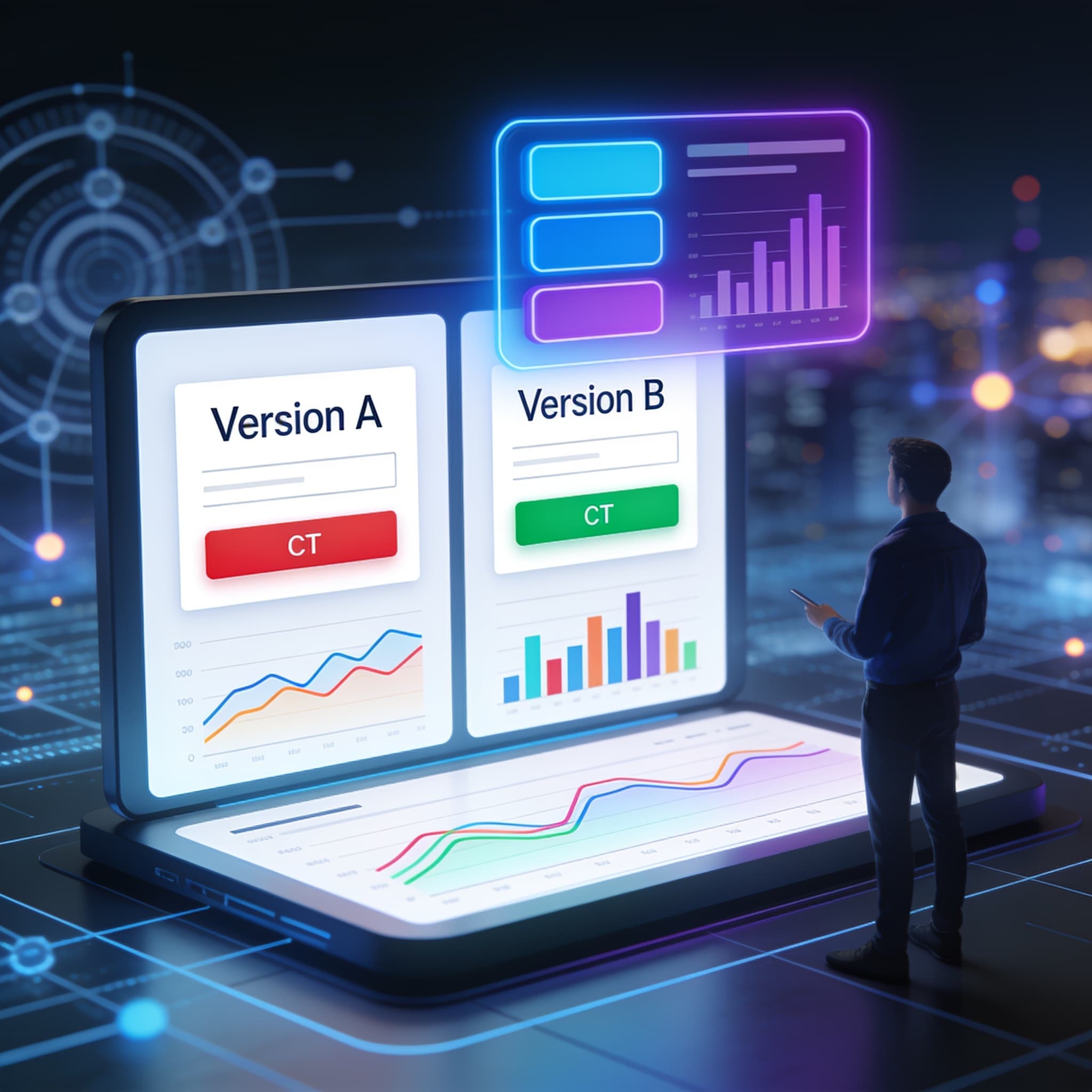
    - Version A: Subject line change
    - Version B: CTA positioning change
Each variant can target segments based on contact attributes (loyalty tier, last booking date, location) and behavioral signals (previous email clicks, WhatsApp message replies, or website visits integrated via webhooks).
This multidimensional context — drawn from Lodgestory’s unified CRM — ensures resends are strategically personalized, not randomly scattered.
What to Test in Resend Workflows
A/B testing within resend campaigns doesn’t need to be complex. The art lies in systematic variation guided by audience data.
1. Subject Lines: The First Lever of Curiosity
Subject lines influence up to 50% of email open behavior. With Lodgestory:
- Test emotional phrasing (e.g., “Don’t Miss Out” vs “Still Interested?”)
- Compare lengths (concise vs descriptive)
- Add personalization tokens from CRM properties, like
{first_name}or{last_reservation_city}
2. Send Times and Intervals
Testing timing reveals when your audience is most attentive. Through analytics filters, marketers can adjust resend intervals, such as:
- After 24 hours vs 72 hours
- Morning vs afternoon local time (using timezone-aware scheduling)
This granular scheduling becomes valuable for global hospitality brands managing cross-region audiences.
3. Content Blocks
The body of a message can make or break conversions. Lodgestory allows modular testing of:
- Image versus video-rich content
- CTA placement (“Book Now” at top vs bottom)
- Copy tone (formal hospitality tone vs conversational)
Lodgestory's Content Studio even enables AI-driven content generation, helping marketers design rapid A/B variant drafts without external tools.
Integrating Automation with Analytics: The Lodgestory Advantage
Many email tools stop at campaign-level metrics. Lodgestory goes deeper by associating each resend experiment with 360° contact analytics, linking every email touchpoint to broader customer behavior across WhatsApp, Instagram, SMS, and voice.
Real-Time Reporting
With Lodgestory Analytics, teams can:
- View real-time delivery, open, and click tracking by variant
- Measure performance against defined goals (e.g., booking confirmations or product purchases)
- Compare resend performance across campaigns using normalized engagement indices
For instance, if version B (a new subject line) achieves 25% more opens but 10% fewer clicks, Lodgestory helps flag not just the winner but the stage at which customers dropped off.
Attribution and Conversion Funnel Tracing
Through contact-to-chat linking, Lodgestory provides multi-channel attribution:
- Email click → WhatsApp inquiry → Booking form submission
This connected intelligence lets marketers identify whether resend variants contribute to conversions via indirect channels, enabling true funnel attribution beyond the inbox.
Practical Example: Resending to Non-Openers in Hospitality Marketing
Imagine a resort running an email campaign titled “Winter Escapes — Limited Villas Available”. After the initial send, 58% of recipients remain unopened. Instead of blindly resending, the marketing team uses Lodgestory to structure variants:
- Variant A: Subject line “Experience Winter Differently — Villas Await” (resend after 36 hours)
- Variant B: Same content, but personalized header image per guest’s past stay
Lodgestory automatically segments the unopened list, delivers variants proportionally, and tracks outcomes:
| Variant | Open Rate | Click Rate | Booking Conversions |
|---|---|---|---|
| A | 32% | 9.2% | 3.8% |
| B | 38% | 11.4% | 4.6% |
Through analytics dashboards, marketers visualize that image personalization boosted engagement by 6%. They can then feed this insight into future campaigns, refining both design and delivery rhythm.
Scaling Multichannel Experimentation Beyond Email
One of Lodgestory’s unique differentiators is omnichannel consistency. What works in email can be A/B tested across channels:
- WhatsApp Campaigns: Run template variant tests on header previews and message copy (see how Lodgestory manages WhatsApp templates).
- Instagram DM Journeys: Adjust automated response timing in Bot Journey Builder.
- Voice Campaigns: Test greeting scripts and IVR tones in Voice & IVR flow variations.
This cross-channel experimentation aligns brand messaging and maximizes every customer interaction surface.
Best Practices for Running Automated Email Resend Tests in Lodgestory
1. Set Clear Hypotheses and Goals
Before launching resends, define what outcome you’re measuring — open rate uplift, click rate increase, or conversion acceleration.
2. Avoid Fatigue with Smart Frequency Capping
Excessive resends lower trust. Lodgestory’s contact-level delivery control ensures customers receive no more than a set number within a defined timeframe.
3. Use Statistical Significance Tracking
Lodgestory Analytics includes an AI-assisted outcome evaluator that flags whether the difference in performance between variants is statistically significant, preventing misinterpretation of random fluctuations.
4. Integrate CRM Segments for Behavioral Precision
Combining customer lifetime value or booking history in segmentation ensures resends optimize for retention quality, not just open rates.
5. Align Across Teams with Omni-Dashboard Insights
From marketing to sales and operations, shared visibility inside Lodgestory keeps all departments aligned on which messaging works best for reactivation.
Future of A/B Testing: From Manual Setup to AI Orchestration
Where traditional marketers manually define splits, Lodgestory’s AI-powered agents are evolving toward autonomous optimization:
- AI agents analyze recent resend performance across campaigns.
- They automatically suggest new test structures, timings, and creative adjustments.
- Through OpenRouter’s GPT-powered orchestration, Lodgestory’s AI can even rewrite underperforming variants and relaunch resends based on prior learnings.
This intelligent loop bridges automation with experimentation — making data learning cyclical and scalable.
The Payoff: Continuous Optimization Across the Customer Lifecycle
Reimagining automated email resends as experiments creates compounding benefits:
- Higher deliverability from engagement-focused content
- Improved personalization accuracy across AI recommendations
- Lifted conversion rates through cross-channel reinforcement
For modern marketers, this means less guesswork and more precision — transforming routine tasks into discovery engines.
Lodgestory turns every resend into a learning moment — uniting automation, analytics, and AI to drive smarter engagement.
Final Thoughts
In 2026 and beyond, marketing automation will not be about sending more emails — it will be about sending smarter ones. By merging A/B testing capabilities with automated workflows, Lodgestory empowers brands to continuously evolve their communication strategy based on real-world behavioral data.
Whether you’re optimizing for guest re-engagement, transactional conversions, or loyalty retention, Lodgestory transforms every non-opener into a new insight. Your email program becomes not a guessing game, but a growth engine.
👉 Sign up with Free Forever Plan: https://lodgestory.com/signup
Continue exploring related articles
- AI Experience Reimagined: How Lodgestory Is Turning Conversations into Actions
- Personalization at Scale: Using CRM Data to Power Smarter Marketing Automation
- The 11 Best Campaign Management Tools for 2026 — And Why Lodgestory Leads the Way
- Lodgestory: Building the Agentic Enterprise with AI-Driven Omnichannel Intelligence