Why Contact Center Quality Management Needed a Reset
For decades, contact center quality assurance (QA) worked the same way. A supervisor pulled a handful of recorded calls per agent, scored them on a spreadsheet or evaluation form, and discussed the results in a coaching session a few weeks later. It was well-intentioned, but it was slow, subjective and statistically thin. A supervisor who reviews a few calls out of thousands handled each month is sampling, and often cherry-picking.
One of the most closely watched examples of a better model comes from Japan. In October 2021, NTT Marketing Act ProCX (now NTT DATA Marketing Act) launched ONE CONTACT Quality Management. It was billed as Asia's first digital transformation (DX) platform for contact center quality management in Japanese, and it won the Best in Technology category at the 2022 Contact Center Awards. This article looks at what that initiative got right, what the wider data says about AI-first quality programs, and how Lodgestory gives contact center, BPO and customer-facing teams a practical path to the same outcomes across voice, WhatsApp, Instagram, email and SMS.
What the NTT Marketing Act Initiative Teaches Us
NTT Marketing Act runs large-scale outsourced contact centers. One interview cited around 8,000 agents, of whom roughly 1,000 were onboarded to automated quality management within six months of rollout. Before the program, the company had tried several AI approaches to estimate customer emotion and score calls, and found many of them misaligned with day-to-day operations. That experience points to the first lesson.
Lesson 1: Quality must be defined in local, behavioral terms
The program was built on roughly 50,000 call records and an equal number of human evaluation results. From that data, the team derived 27 response indicators across three groups: basic skills, communication skills and CX mindset. Sixteen AI models were tuned to behaviors that shape how a customer feels, including a courteous greeting, a clear explanation, empathy and ownership of the problem.
The takeaway for any organization is that a generic scorecard is not enough. Quality criteria have to reflect your language, your customers and your brand promise. A luxury hotel's definition of a great interaction differs from a freight tracking desk's, and both differ from a clinic's appointment line.
Lesson 2: Evaluate every interaction, not a sample
The platform automatically applies its indicators to all calls rather than a random few. Supervisors can see strengths and weaknesses across the whole agent population and replay the calls linked to a specific weakness. NTT representatives reported an average improvement of about one point on their internal quality scale after AI evaluation was introduced.
Lesson 3: Quality data belongs next to operational data
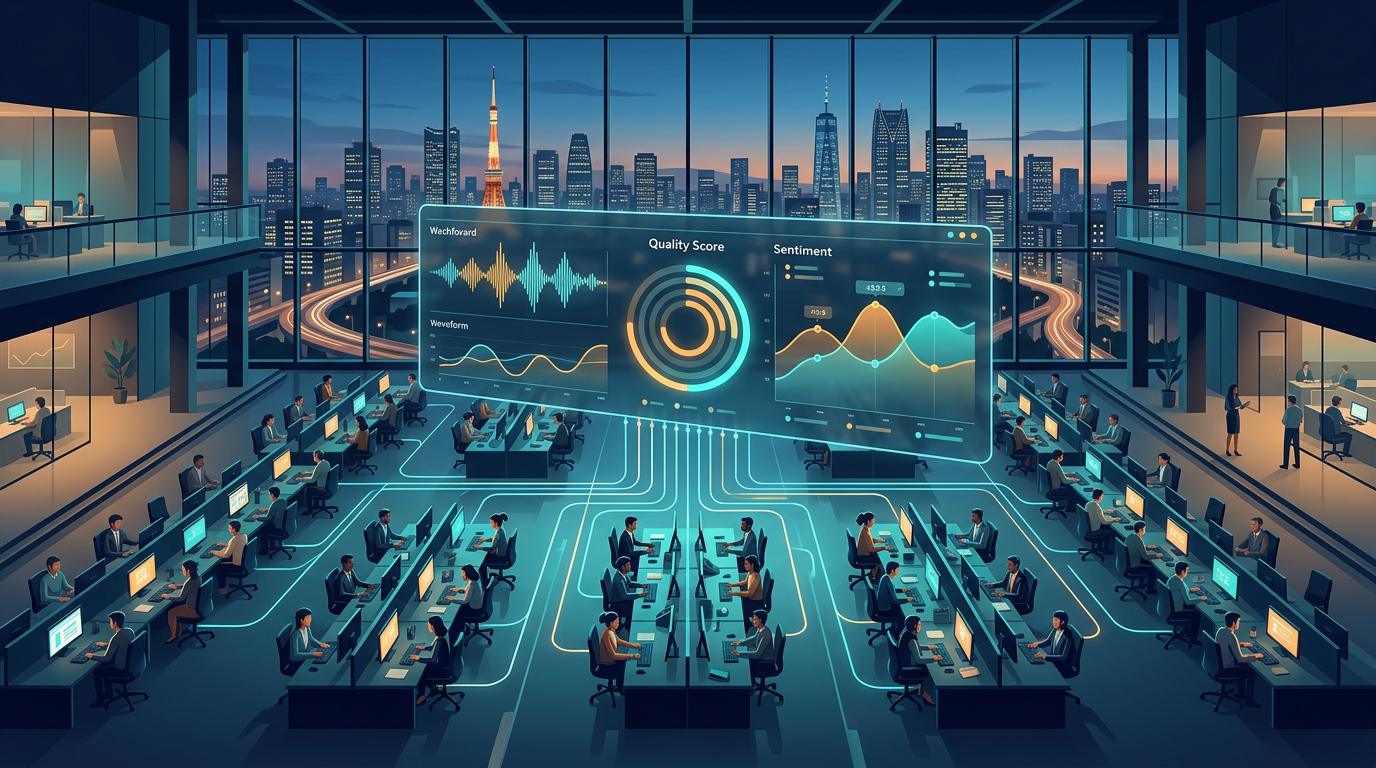
The platform links response quality (how the agent talks) with operational quality (whether processes were followed). It brings both into a single dashboard so managers can see KPIs and center performance in one view. That is the same logic behind modern omnichannel platforms: conversation data, ticket data and outcome data should not live in separate tools.
Lesson 4: Recognition follows productization
The award did not come from a pilot. It came from turning a proven internal method into a licensable, scalable product that fits a BPO model. For teams running customer operations, the lesson is to standardize your quality framework so it can be repeated across clients, regions and channels.
The Business Case: What the Data Says About AI-First QA
The Japanese example sits within a larger body of evidence.
A Forrester Consulting Total Economic Impact study, commissioned by a vendor of AI quality and analytics tools and modeled on a composite organization of 5,500 agents, found the following over three years:
- 268% ROI and a net present value of about $18.58 million.
- A 90% reduction in manual call evaluations.
- Agent attrition cut from over 50% to 25%.
- A 14% reduction in customer churn.
- An $11.6 million lift in high-margin add-on sales through targeted, data-informed coaching.
Real-world operations show similar patterns:
- A waste and recycling services provider replaced Excel-based QA and scattered phone and email data with unified dashboards and a composite agent performance score built from 26 KPIs. It saw a 20% reduction in unproductive time, a 10% improvement in overall performance, and handle rates rising from 85% to consistently above 95%.
- A UK home furnishings retailer stopped judging its contact center on daily conversation counts and shifted to quality and first-call resolution. It reported a 267-second improvement in average speed of answer, nearly 30% lower contact volume, a 10% gain in agent productivity and a 50% drop in call abandonment.
- An insurance carrier cut the time for feedback to reach agents from up to two weeks to the same day. QA scores rose from 85% to 95%, CSAT and NPS climbed from the mid-50s to 70, and new-agent training time fell by a full week.
The pattern is consistent. Full-coverage evaluation, fast feedback and unified data improve both customer experience and agent experience.
The wider CX context
NTT's 2023 Global Customer Experience Report adds important context:
- 77% of top-performing organizations believe AI can deliver CX results that meet or exceed expectations.
- 97% are integrating customer touchpoints that combine real-time data, AI and analytics.
- Only about 44% say their business units collaborate on designing the best possible CX.
- Highly automated organizations see more than a 10% uplift in employee experience, new customer acquisition and ease of resolution.
The last two points matter most. Technology alone does not close the coordination gap. Quality management has to be wired into how teams actually work: shared inboxes, shared tickets, shared dashboards and shared definitions of success.
Where Most Teams Get Stuck
Most customer-facing organizations, from boutique hotels to logistics providers to clinics, share a familiar set of problems:
- Fragmented channels. WhatsApp conversations, email threads and phone calls are reviewed (or ignored) in separate tools.
- Sampling bias. Only a small percentage of interactions are ever evaluated.
- Delayed coaching. Feedback reaches agents long after the customer has moved on.
- Opaque performance data. Agents do not know how they are scored, and managers cannot easily compare teams.
- Manual, repetitive queries. High-volume routine questions consume the time that should go to coaching and complex cases.
Large BPOs can build a custom platform on 50,000 labeled calls. Most businesses cannot, and they do not need to. They need a unified workspace that captures every interaction, structures it, and makes it measurable.
How Lodgestory Helps You Build an AI-First Quality Program
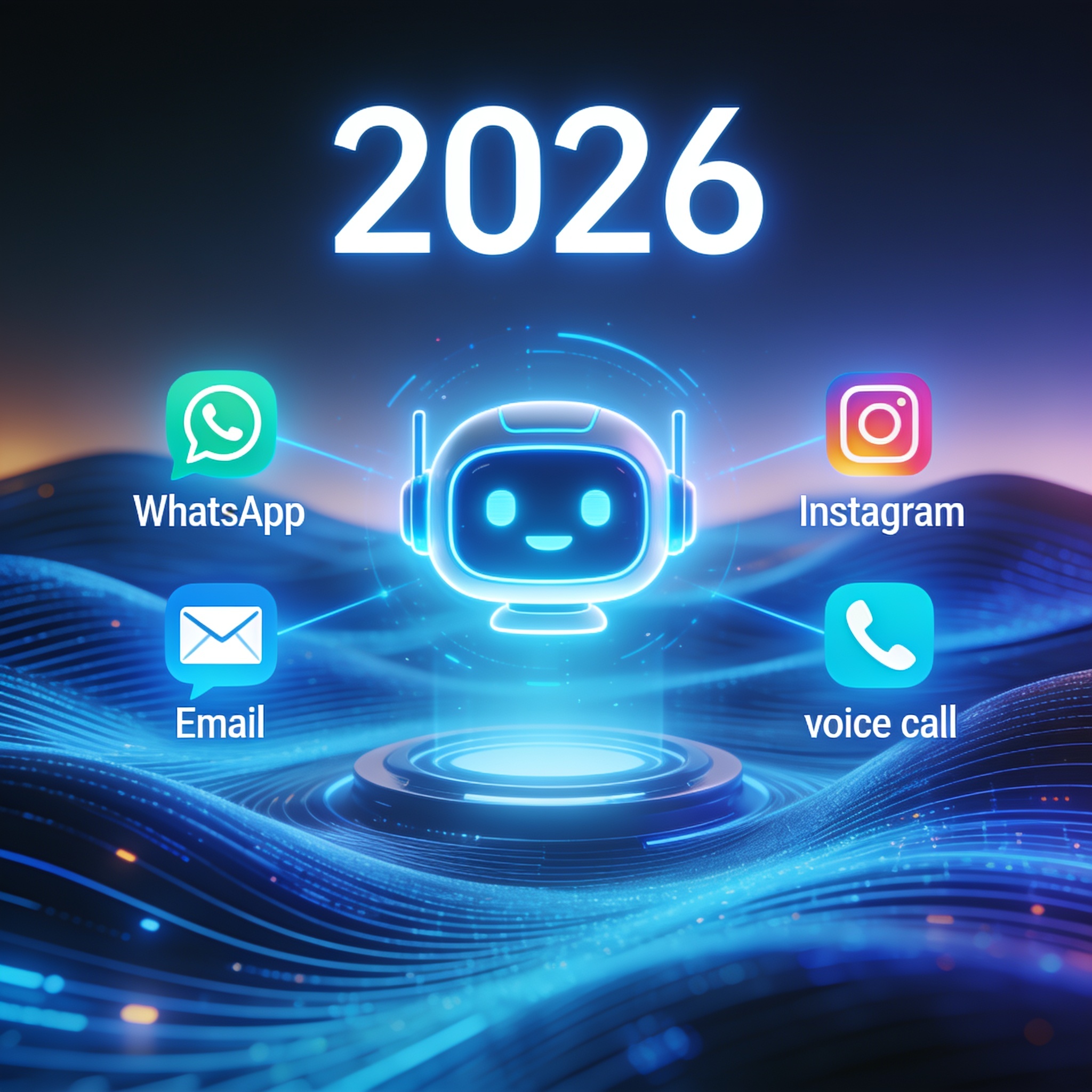
Lodgestory is an omnichannel communication platform that brings WhatsApp, Instagram, email, SMS and voice into a single intelligent inbox. Here is how its capabilities map to the lessons above.
1. One workspace, every channel, full visibility
When all conversations land in a unified inbox with real-time updates, quality review stops being a voice-only exercise. Supervisors can look at a WhatsApp booking conversation, an email escalation and a phone call from the same customer in a single contact view. Each contact is backed by the CRM, with custom properties and advanced filtering (equals, contains, starts with, greater than, less than, is empty), so context is never lost. For a deeper look at the workspace agents use, see What Is an Agent Panel?
2. Voice that is built for supervision and coaching
Lodgestory Voice and IVR includes call recording, call logs with direction, duration, status and agent attribution, and a browser-based WebRTC softphone. Supervisors can use monitor, whisper, barge and transfer to coach in the moment instead of weeks later. This is the same same-day feedback loop that produced the QA gains in the insurance example. Department-based routing keeps the right calls with the right teams. Related reading:
- What Is Call Barging and How Lodgestory Is Redefining Voice Supervision
- What Is a Call Tag and Why It's the Backbone of Modern Voice Support
- What Is Call Disposition
3. Structured outcomes through tickets and SLAs
The ticketing system turns conversations into accountable work. Priority levels (SOS, High, Medium, Low and No Action Required), custom issue category hierarchies, media attachments and agent assignment tracking give you the operational-quality layer that NTT linked to its response-quality scores. SLA tracking shows whether promises to customers are being kept. See AI-Driven Ticketing with Lodgestory for a deeper look.
4. AI agents that remove the routine so humans can coach and care
One of the biggest drivers of better quality is giving agents time to handle complex cases well. Lodgestory AI Agents use custom knowledge bases built on semantic search over your uploaded documents. They can call your own APIs through tool calling, extract variables from the conversation, and hand off to a human or a specific journey path when trigger conditions are met. A hotel agent can answer policy questions, check a reservation through a PMS webhook and escalate a complaint with full context. Customers see automation handling up to 70% of queries, and teams respond up to 40% faster. Explore more in AI Agents for Business and Boosting Team Productivity with Lodgestory's AI Agents.
5. Consistent behavior through journeys and canned responses
NTT's 27 indicators exist because consistency is hard. In Lodgestory, the no-code Bot Journey Builder (16+ node types, including conditional branching, API calls, goal tracking and agent transfer) and a canned response library with shortcodes encode your best practice into every interaction. A courteous, complete and on-brand greeting becomes the default instead of something supervisors hope for. See Canned Responses in 2026.
6. Language and local context at scale
The Japanese program succeeded because it was tuned to local language and culture. Lodgestory supports AI-driven knowledge bases that scale across languages, so guests, patients and shippers get answers in the language they are most comfortable with. See Multilingual Customer Experience at Scale and Building a Multilingual Knowledge Base with Lodgestory.
7. Analytics that connect quality to outcomes
Lodgestory offers five report types: chat, contact, ticket, call log and goal conversion. All support async generation, date-range filtering and downloadable exports. Goal tracking inside journeys ties conversations to business outcomes such as bookings, payments, completed appointments and upsell acceptance. That is the link between behavior and revenue that the add-on sales figures above illustrate. For the metrics worth tracking, see 15 Essential Contact Center Metrics and Call Center Quality Management Reimagined.
Comparing the Approaches
| Dimension | Traditional manual QA | Custom-built AI QA at a large BPO | Lodgestory unified approach |
|---|---|---|---|
| Coverage | Small sample of calls | All calls via trained models | Every interaction captured across voice and messaging channels |
| Feedback speed | Weeks | Near real time | Live supervision (monitor, whisper, barge) plus same-day review |
| Scope | Voice only | Primarily voice and operations data | Voice, WhatsApp, Instagram, email, SMS in one inbox |
| Setup effort | Low, but labor-intensive | Very high (tens of thousands of labeled records) | No-code journeys, knowledge bases and templates |
| Outcome linkage | Rare | Dashboards of KPIs | Goal tracking, ticket SLAs and five report types |
A Practical Roadmap You Can Start This Quarter
- Define your quality dimensions. Borrow the three-part idea of basic skills, communication skills and CX mindset. Write down five to ten observable behaviors for each, such as greeting, verification, clarity, empathy and ownership.
- Unify your channels. Bring WhatsApp, Instagram, email, SMS and voice into one inbox so that no channel escapes review.
- Automate the routine. Deploy an AI agent backed by your knowledge base for the top 10 to 20 repetitive questions. Use handoff rules so complex or emotional cases reach a human fast.
- Instrument outcomes. Add goal-tracking nodes to journeys and apply consistent ticket categories and priorities so every conversation ends in a measurable result.
- Coach in the moment. Use monitor and whisper for live coaching during high-risk calls, and review call recordings the same day for targeted feedback.
- Review weekly, not quarterly. Use scheduled exports from the five report types to run a short weekly quality review with team leads.
- Benchmark and iterate. Compare first response time, resolution time, abandonment and CSAT before and after each change. Our guides on First Call Resolution, Average Handling Time and CSAT benchmarks can help.
Industry Examples
- Hospitality: Use AI agents to handle check-in questions, amenity requests and booking changes over WhatsApp, and route complaints to humans with an SOS or High ticket priority. Supervisors review phone and message interactions side by side. See how hotels use Lodgestory.
- Logistics: Automate shipment status updates and delay alerts through journeys with API calls, and use call tags and dispositions to find the root causes of repeat contacts.
- Healthcare: Automate appointment reminders and routine FAQs, and keep humans focused on sensitive calls where empathy matters most.
- Travel: Run broadcast campaigns with approved WhatsApp templates for itinerary changes, then measure per-recipient delivery and downstream conversions.
The Bigger Picture
The NTT Marketing Act story is a clear statement of where the industry is going. Quality management is becoming continuous, automated and tied to customer and employee experience, and it is being recognized as a core technology investment. What matters is the principle: evaluate everything, define quality in local and behavioral terms, coach quickly, and connect quality to business results. You do not need a 50,000-call training set or a multi-year build to apply it. You need a platform that unifies your conversations, structures your outcomes and automates the repetitive work. For a broader view of where this is heading, read Lodgestory: Building the Agentic Enterprise and 10 Ways AI Will Transform Customer Experience by 2026.
Start Improving Quality Across Every Channel
If your team still samples a few calls, juggles disconnected inboxes or coaches weeks after the fact, you can change that without a major engineering project. Lodgestory gives you the unified inbox, voice supervision, AI agents, ticketing, CRM and analytics to build a quality program that covers every customer conversation.
Sign up with Free Forever Plan and see how much faster and more consistent your customer experience can become.